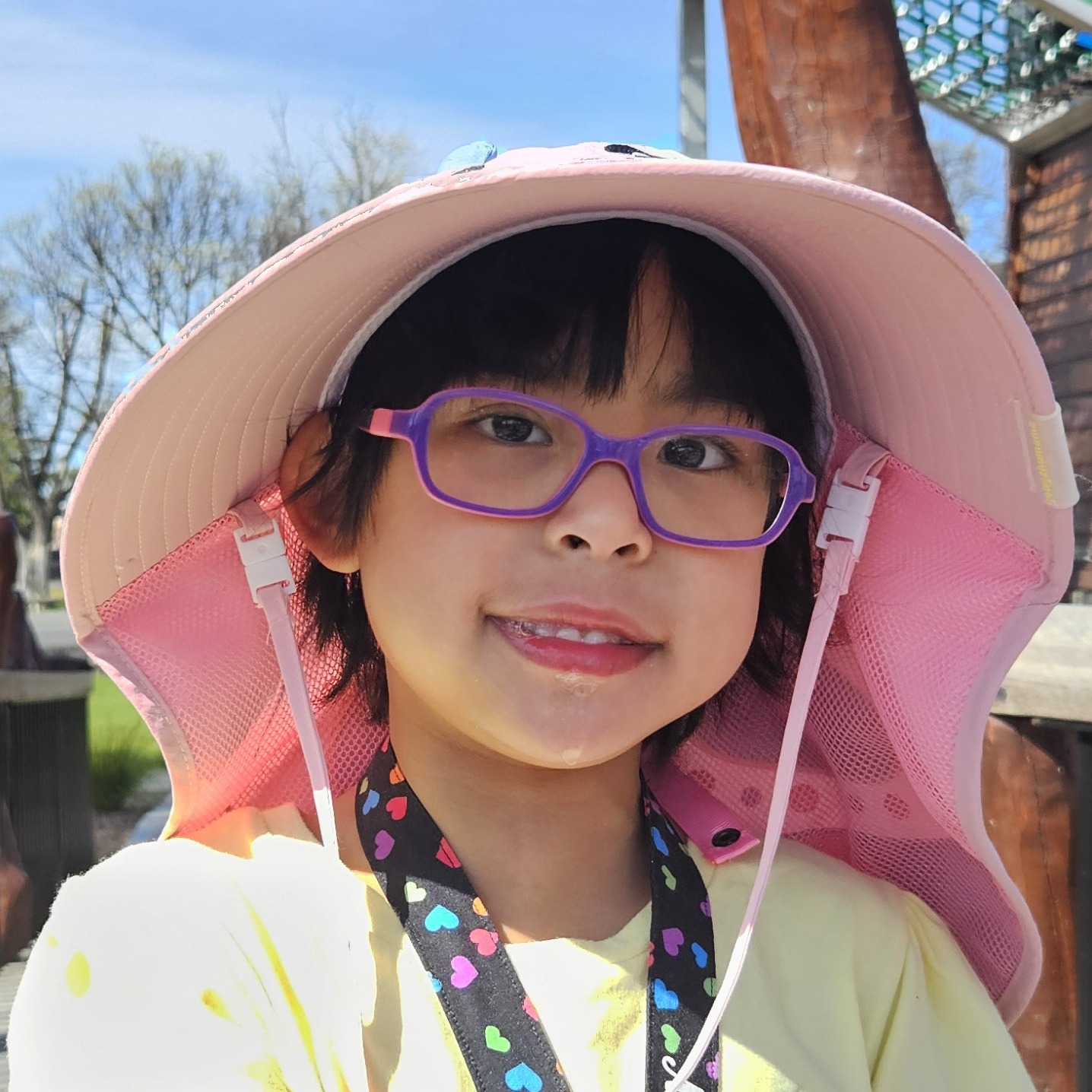
Meet Maria.
Maria is five, and loves music, especially Cocomelon.
She also has Rett syndrome. She doesn't use spoken words and has very limited purposeful use of her hands, but she has plenty to communicate.
Maria in 30 seconds
- On TV
- Her favourites include Cocomelon, Encanto and Turning Red. If the TV changes or pauses, she makes her opinion clear — sometimes by coming to find us.
- Music and stories
- Favourite songs make her smile and laugh. She often has an MP3 player with her, and loves rhyming books like Where Is the Green Sheep?
- Outdoors
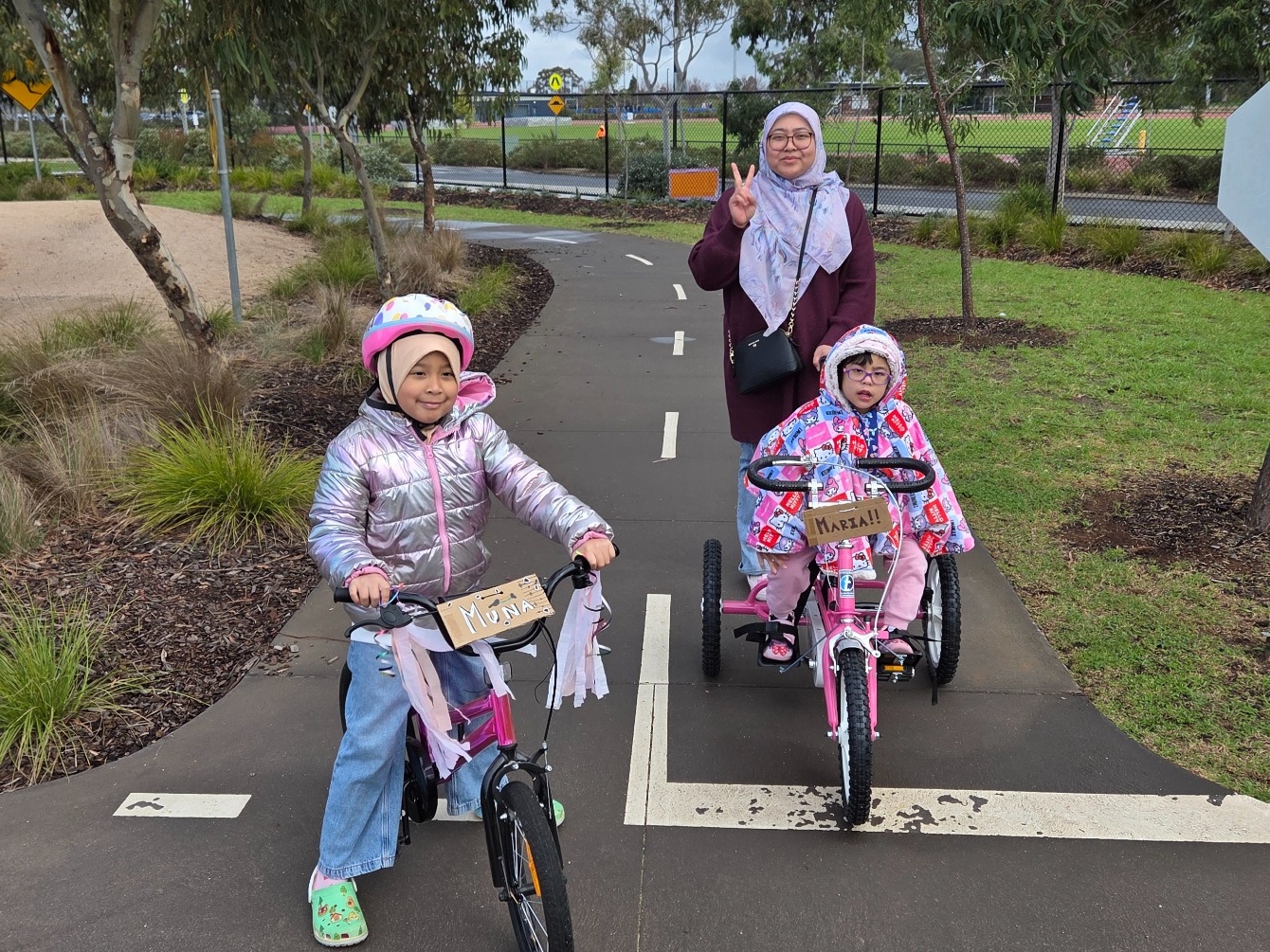
- She loves being outside, especially riding her pink tricycle.
- People
- Maria is very social and loves having people around her.
- Food
- She's a picky eater, but you can't go wrong with chips and Milo.
What Rett means for Maria
Communication
Maria doesn't use spoken words. We're exploring eye-gaze communication, which lets her select words or pictures by looking at them.
Hands
Maria has very limited purposeful use of her hands. That makes sign language an impractical alternative to speech.
Mobility
Maria can walk with support, but tires easily and can lose her balance during breath-holding episodes. She uses a buggy or wheelchair for longer outings, and loves riding her adapted tricycle.
Breathing
Maria experiences frequent involuntary breath-holding episodes. They’re her biggest day-to-day challenge, as they can interrupt walking, eating and even eye-gaze communication — sometimes making ordinary activities unsafe or difficult.
Speechless for Maria
On Wednesday 14 October 2026, I’m spending the workday without speaking, including during meetings. I’ll use a communication board, gestures and typing when I need to. It falls during Rett Syndrome Awareness Month, International AAC Awareness Month, and Australia’s National Carers Week.
So much of everyday conversation depends on answering quickly: joining a discussion, making a joke, or correcting a misunderstanding. Without speech, even simple exchanges can take more time and patience.
This isn’t an attempt to simulate Rett syndrome. Maria also faces challenges with movement, hand use and breathing that my silent day cannot begin to replicate. And unlike Maria, I can simply speak again tomorrow. It’s a small way to raise awareness and start conversations about Rett.
Inspired by the Speechless for Rett syndrome campaign, I’m using a two-sided A4 sheet that you can download here (PDF).
Rett in 60 seconds
Rare genetic condition
Rett syndrome is a rare neurological condition, usually caused by a change in the MECP2 gene on the X chromosome. The gene helps brain cells function properly. Rett affects about 1 in 10,000 girls, although boys can have it too. Most cases happen by chance rather than being inherited.
Development and regression
Early development can seem typical, although subtle differences often begin around 6–18 months. During early childhood, many children lose skills they had already gained, especially speech and purposeful hand use. This is called regression, and repetitive hand movements may also emerge. Later, some abilities may stabilise or improve, although lifelong support is often needed.
Real reason to hope
There is no cure for Rett syndrome yet. But treatments for some symptoms exist, and researchers are testing new approaches, including gene therapies targeting the underlying cause. The outcomes aren't certain, but there is genuine reason to hope.
Learn more
Awareness matters more when there's a person behind the word.
This site is a little introduction to Maria and what Rett syndrome means for her.
For more detailed information about Rett syndrome, support for families and current research, these are two good places to start.